This is taken from the Government website, you can use the links below which will help you to ensure your little one has the care they need for healthy teeth and gums. We have put some of the information onto this page in case you find it difficult to access the links or please come and see us we would be happy to help.
https://help-for-early-years-providers.education.gov.uk/health-and-wellbeing/oral-health
https://www.gov.uk/government/publications/health-matters-child-dental-health/health-matters-child-dental-health
Why oral health is in the EYFS framework
The EYFS framework states that early years providers must promote good oral health of children who attend their setting.
Oral health is important, even with baby teeth. This is because children’s baby teeth:
- help them to bite and chew
- support speech and language development
- help them feel confident when they smile
- make space for and help to guide adult teeth
Good oral health also keeps children free from toothache, infection and swollen gums.
Tooth decay
Children need to form good oral health habits from an early age to help avoid tooth decay. Tooth decay happens when sugars from food and drinks interact with bacteria in tooth plaque. This results in acid production, causing holes in teeth known as cavities.
If children have tooth decay, they may have yellow, brown or black marks on their teeth. They may also complain about their teeth hurting, particularly when eating or drinking.
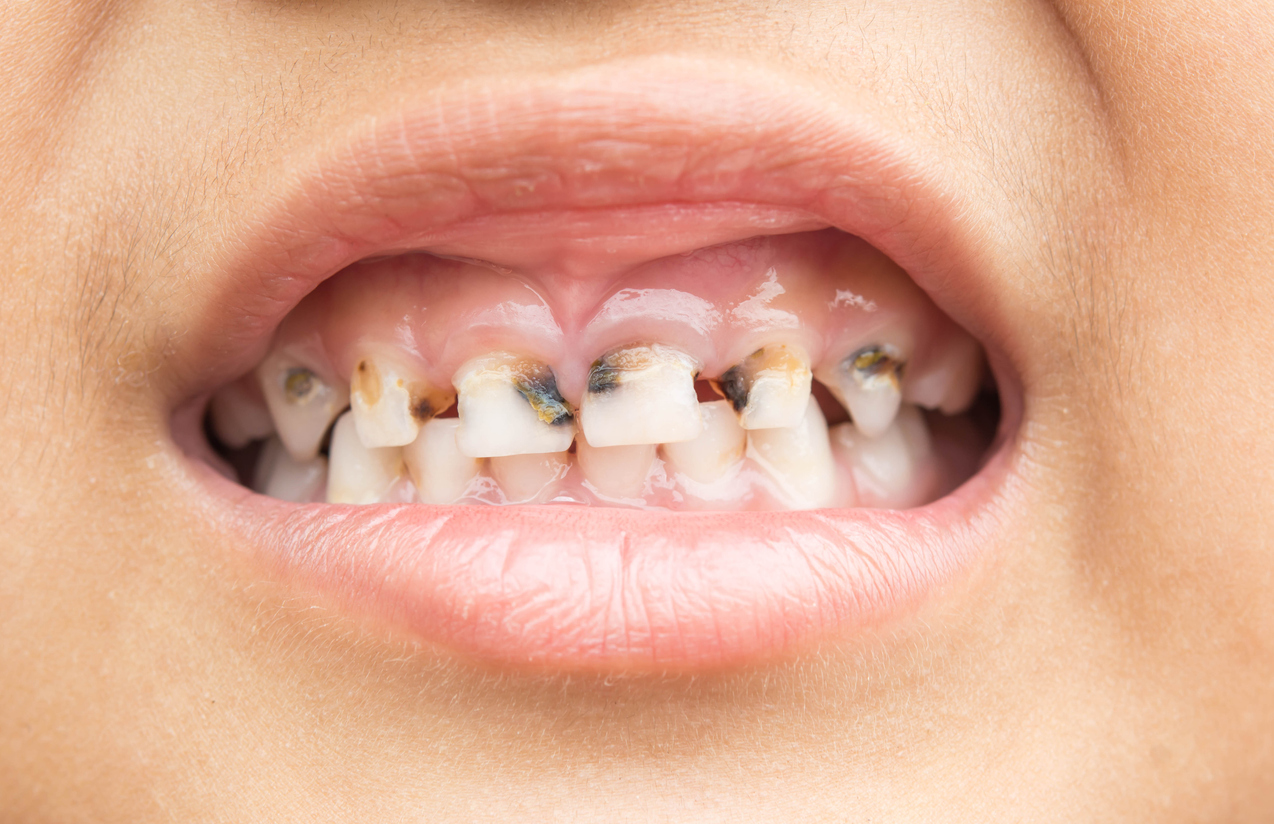
Tooth decay is largely preventable, but it’s still a serious problem among young children. The Office for Health Improvement and Disparities oral health survey of 5 year old children 2022 and Public Health England oral health survey of 3 year old children 2020 found that:
- nearly a quarter of 5 year olds in England have tooth decay, affecting 3 to 4 teeth on average
- children from more deprived backgrounds are more likely to have tooth decay
- 11% of 3 year olds in England have visible tooth decay, affecting 3 teeth on average
You can find links to the surveys in the useful resources section at the end of this article.
Having decayed teeth removed is also the most common reason for surgery under a general anaesthetic for children aged 6 to 10.
Looking after children’s oral health
There are several key steps practitioners, parents and carers can take to promote good oral health in children.
Cutting down on free sugars
You should limit the amount of free sugars children eat or drink in your setting, as well as how often they consume them. This can help to avoid tooth decay.
Free sugars include all sugar added to food and drinks by the manufacturer, cook or consumer. They are found in foods like:
- cakes, biscuits and chocolates
- processed foods – like some jarred sauces, jams and breakfast cereals
- some flavoured yoghurts
They are also found in natural products like:
- honey and syrups
- fruit juices and purees
- smoothies
Free sugars are not found in:
- whole fruit and vegetables
- plain, unflavoured milk and yoghurt
- water
Water and milk are the only safe drinks to give children in regard to their oral health. Fruit juices and smoothies should not form part of a young child’s daily diet.
As well as limiting the amount of free sugars children eat or drink, you should also make sure that they only have food or drinks that contain sugar at mealtimes. This is because, the more often their teeth come into contact with sugar, the more likely they will be to get tooth decay. Children should avoid food and drinks containing free sugars before bedtime and overnight.
Drinking bottles and cups
What children drink from can impact their oral health.
You should only give babies bottles of breast milk, formula milk, or boiled water that has cooled down.
From 6 months old, you can offer babies drinks in open-top cups. These are cups with no lids, which spill if knocked over. These cups can help children develop their sipping skills. This strengthens their face muscles, which helps them to bite, chew and talk.
When introducing open-top cups, start with smaller cups or those with handles. These are easier for babies to grip. Offer a small amount of water at first, and gradually increase this over time.
You may need to show babies how to use the cup and help them to hold it at first. Some babies may need to use a sipping cup or beaker with a spout before they can use an open-top cup. If this is the case, you should make sure that the spout does not have a valve, that drinks can freely flow through it, and that babies do not need to suck.
From 12 months old onwards, you should encourage children to have all drinks in open-top cups. From this point, avoid using any bottles or cups that need children to suck, like those with soft teats or valves.
You can find an NHS video about how and when to move babies from bottles to cups in the useful resources section at the end of this article.
Brushing teeth
As soon as a child’s teeth start to come through, they are ready for tooth brushing to start.
For effective tooth brushing:
- use a fluoride toothpaste that contains at least 1000 parts per million (ppm) of fluoride – you can find this information on the packaging
- use a smear of toothpaste for children under 3, and a pea sized amount for those aged 3 to 6
- brush in circles for around 2 minutes, making sure to cover the whole of each tooth
- brush twice a day, including once just before bed – this allows the fluoride to keep working while children sleep
- children should spit, not rinse, after brushing – this avoids washing away the fluoride
- adults should help children to brush their teeth until they are 7 years old to make sure they are brushing properly
The images below show what a smear and a pea sized amount of toothpaste look like on a typical child’s toothbrush.
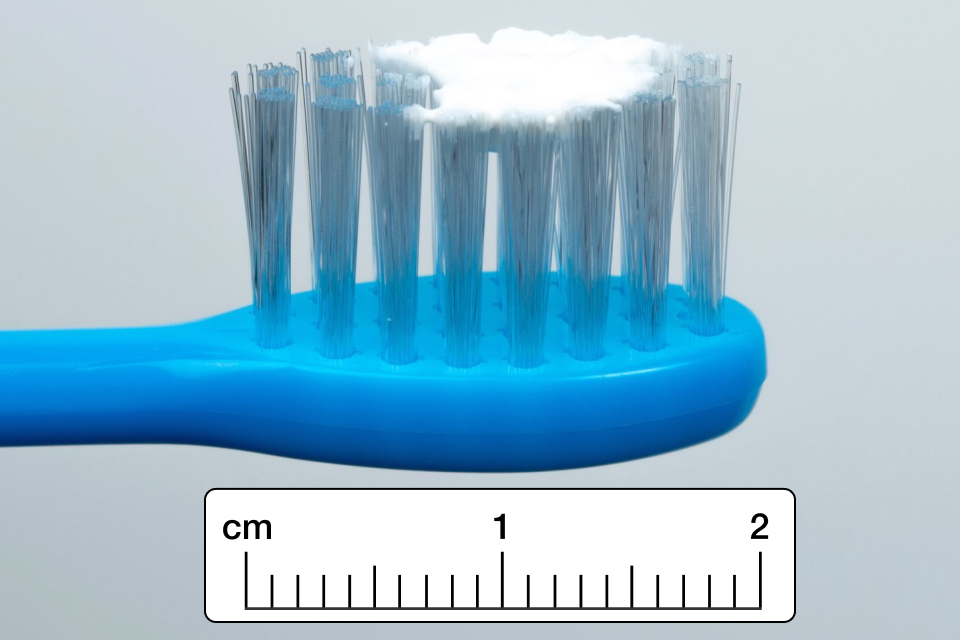
Use a smear of toothpaste for children under 3.
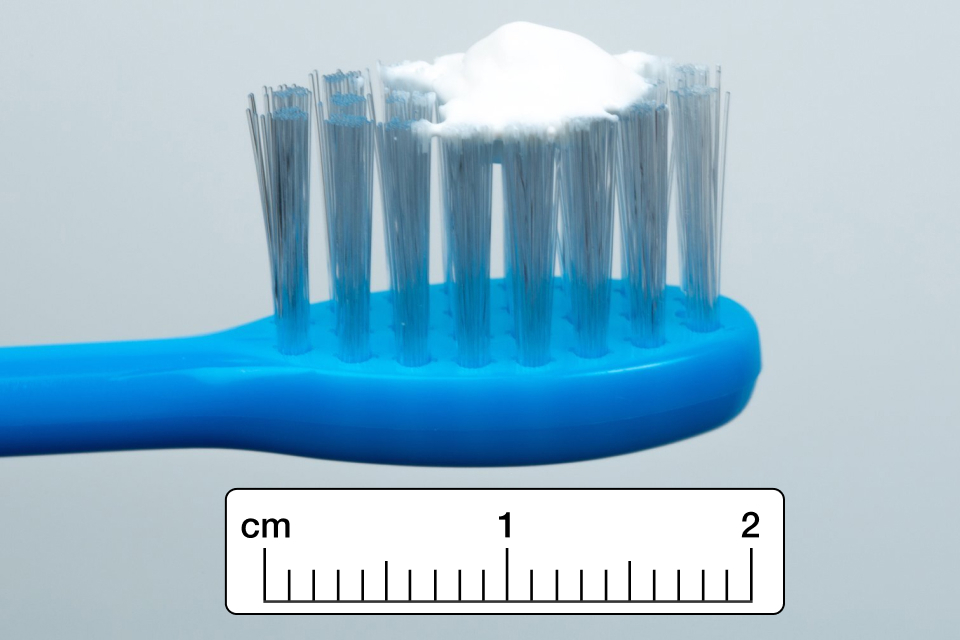
Use a pea sized blob of toothpaste for children aged 3 to 6.
How to promote good oral health in your setting
You can decide how you promote oral health based on what works best in your setting. Ideally, you should link oral health to other key topics, like self-care, healthy eating, and physical development.
Being playful with children can help to promote good oral health. There are a number of activities you can use to teach them about tooth brushing and care.
Dentist role play
Try setting up a dentist role play in your setting. This familiarises children with the dentist’s environment, equipment and processes.
Practise tooth brushing on dolls and toys
You can show children how to do this yourself first to model effective tooth brushing.
Brush model teeth
Use a set of model teeth or a laminated picture, and add playdough, marker pen or tissue paper to represent tooth plaque. Encourage the children to use a toothbrush to remove the ‘plaque’.
Stories and discussion
You can read stories with children about teeth and smiles. These can cover important topics like visiting the dentist and brushing teeth. You should also discuss the foods and drinks that do and do not help to grow healthy, strong teeth with children.
Talking tubs are a good way to promote conversations with children. Place items related to oral health in a tub, then get children to explore and talk about them with you.
You can add things like:
- toothbrushes
- pictures of dentists
- false or model teeth
- a selection of foods and drinks
Visits with dentists
You could contact your local dental surgery and ask them if it is possible to show the children around. This will help familiarise the children with the environment and equipment dentists use. You could also invite a member of the dental team to your setting to talk about their job and the importance of good oral health.
Supervised tooth brushing programmes
Supervised tooth brushing may be suitable in your setting. These programmes have been found to prevent tooth decay by teaching children how to brush their teeth and encourage tooth brushing routines at home. Children also benefit from brushing their teeth with fluoride toothpaste once a day while at their early years setting. This is especially important for those children who may not regularly brush their teeth at home.