Policy statement
Our setting believes that the health and safety of children is of paramount importance. We make our setting a safe and healthy place for children, parents, staff and volunteers.
- We aim to make children, parents, staff and volunteers aware of health and safety issues and to minimise the hazards and risks to enable the children to thrive in a healthy and safe environment.
- The members of staff responsible for health and safety is:
Sam Lavender and Joanne Fern
- They are competent to carry out these responsibilities.
- They have undertaken health and safety training and regularly their knowledge and understanding.
- We display the necessary health and safety poster in:
On the door
Insurance cover
We have public liability insurance and employers’ liability insurance. The certificate for public liability insurance is displayed:
On the Communication display board located in the hallway
Procedures
Awareness raising
- Our induction training for staff and volunteers includes a clear explanation of health and safety issues, so that all adults are able to adhere to our policy and procedures as they understand their shared responsibility for health and safety.
- Records are kept of these induction training sessions and new staff and volunteers are asked to sign the records to confirm that they have taken part.
- Health and safety issues are explained to the parents of new children, so that they understand the part played by these issues in the daily life of the setting.
- We operate a no-smoking policy.
- Children are made aware of health and safety issues through discussions, planned activities and routines.
Safety of adults
- Adults are provided with guidance about the safe storage, movement, lifting and erection of large pieces of equipment.
- When adults need to reach up to store equipment or to change light bulbs, they are provided with safe equipment to do so.
- All warning signs are clear and in appropriate languages.
- Adults do not remain in the building on their own or leave on their own after dark.
- The sickness of staff and their involvement in accidents is recorded. The records are reviewed termly to identify any issues that need to be addressed.
- We keep all cleaning chemicals in their original containers.
Windows
- Low level windows are made from materials that prevent accidental breakage or are made safe.
- Windows above the ground floor are secured so that children cannot climb through them.
Doors
- We take precautions to prevent children’s fingers from being trapped in doors.
Floors
- All floor surfaces are checked daily to ensure they are clean and not uneven, wet or damaged.
Electrical/gas equipment
- All electrical/gas equipment conforms to safety requirements and is checked regularly.
- Our boiler/electrical switch gear/meter cupboard is not accessible to the children.
- Fires, heaters, electric sockets, wires and leads are properly guarded and the children are taught not to touch them.
- There are sufficient sockets to prevent overloading.
- The temperature of hot water is controlled to prevent scalds.
- Lighting and ventilation is adequate in all areas including storage areas.
Storage
- All resources and materials, which are used by the children, are stored safely.
- All equipment and resources are stored or stacked safely to prevent them accidentally falling or collapsing.
Outdoor area
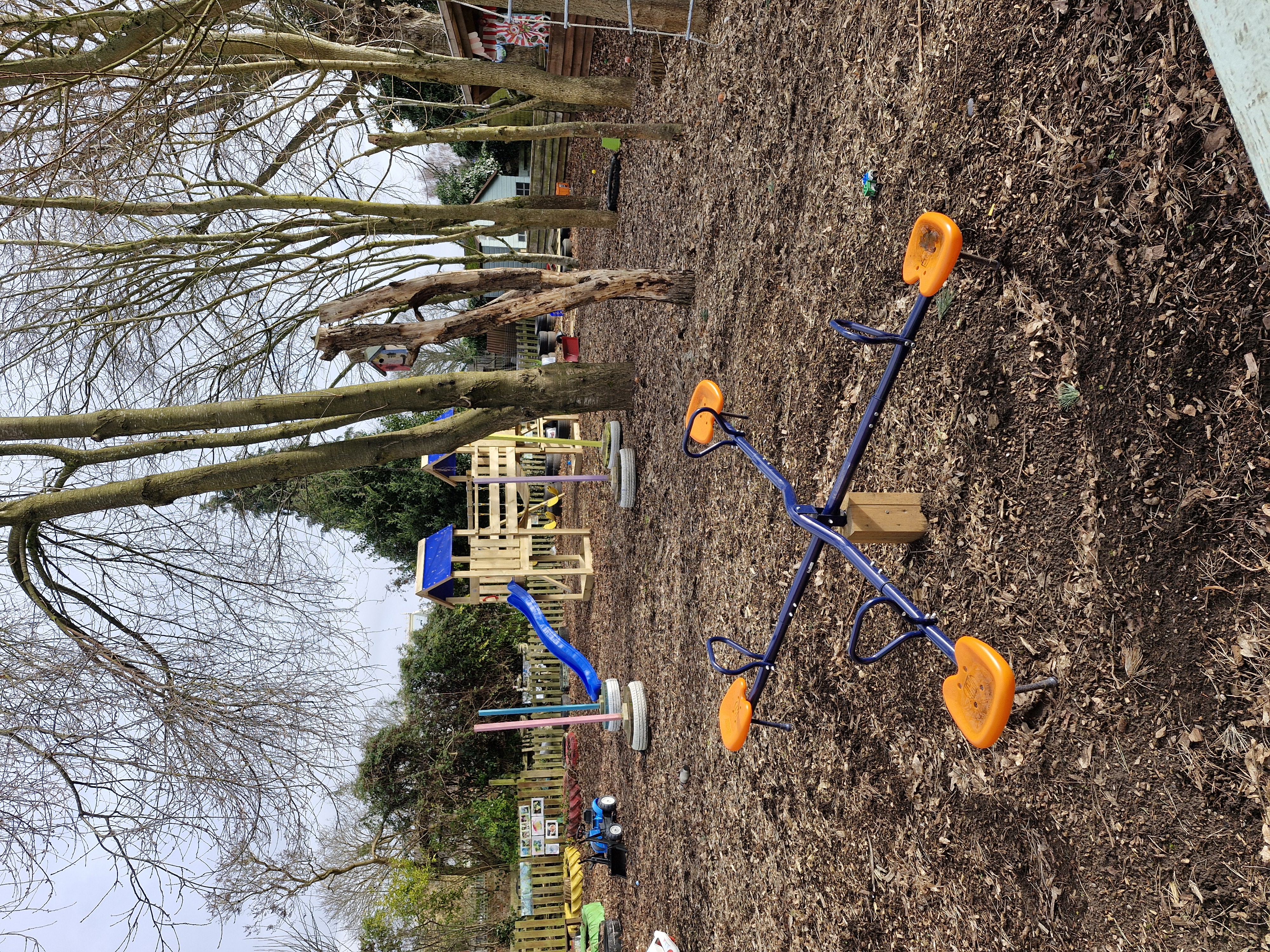
- Our outdoor area is securely fenced.
- Our outdoor area is checked for safety and cleared of rubbish before it is used.
- Adults and children are alerted to the dangers of poisonous plants, herbicides and pesticides.
- Where water can form a pool on equipment, it is emptied before children start playing outside.
- All outdoor activities are supervised at all times.
Hygiene
- We seek information from the Health Protection Agency to ensure that we keep up-to-date with the latest recommendations.
- Our daily routines encourage the children to learn about personal hygiene.
- We have a daily cleaning routine for the setting, which includes the play room(s), kitchen, toilets and nappy changing areas.
- We have a schedule for cleaning resources and equipment, dressing-up clothes and furnishings.
- The toilet area has a high standard of hygiene, including hand washing and drying facilities and disposal facilities for nappies.
- We implement good hygiene practices by:
- cleaning tables between activities;
- cleaning and checking toilets regularly;
- wearing protective clothing – such as aprons and disposable gloves – as appropriate;
- providing sets of clean clothes;
- providing tissues and wipes
Activities and resources
- Before purchase or loan, equipment and resources are checked to ensure that they are safe for the ages and stages of the children currently attending the setting.
- The layout of play equipment allows adults and children to move safely and freely between activities.
- All equipment is regularly checked for cleanliness and safety, and any dangerous items are repaired or discarded.
- All materials, including paint and glue, are non-toxic.
- Sand is clean and suitable for children’s play.
- Physical play is constantly supervised.
- Children are taught to handle and store tools safely.
- Children learn about health, safety and personal hygiene through the activities we provide and the routines we follow.
- Any faulty equipment is removed from use and is repaired. If it cannot be repaired it is discarded.
- Large pieces of equipment are discarded only with the consent of the manager and the management team.
Legal framework
- Health and Safety at Work Act (1974)
- Management of Health and Safety at Work Regulations (1999)
- Electricity at Work Regulations (1989)
- Control of Substances Hazardous to Health Regulations (COSHH) (2002)
- Manual Handling Operations Regulations (1992 (As Amended 2004))
- Health and Safety (Display Screen Equipment) Regulations (1992)
Further guidance
- Health and Safety Law: What You Need to Know (HSE Revised 2009)
- Health and Safety Regulation…A Short Guide (HSE 2003)
- Electrical Safety and You: A Brief Guide (HSE 2012)
- Working with Substances Hazardous to Health: What You Need to Know About COSHH (HSE Revised 2009)
Getting to Grips with Manual Handling – Frequently Asked Questions: A Short Guide (HSE 2011)
Hot drinks
- No hot drinks to be taken outside, indoors only
- Hot drinks should always be out of children’s reach
- Hot drinks are to be pushed back as far as possible if on lower surface to avoid spillage and accidents
- No hot drinks to be put on any table or floor whilst children are around.